Hospital Wayfinding
Our award-winning project that reframed hospital volunteer burnout as a wayfinding challenge and led to a multi-modal solution for visitors.
Role
Duration
St. Joseph’s Hospital

Patient Family Advisors (PFAs) are experienced volunteers within the hospital network, many of whom have cared for family members through extended hospital stays. At St. Joseph’s Hospital, PFAs are currently overextended, leaving numerous advocacy opportunities unaddressed.
Reframing the Challenge:
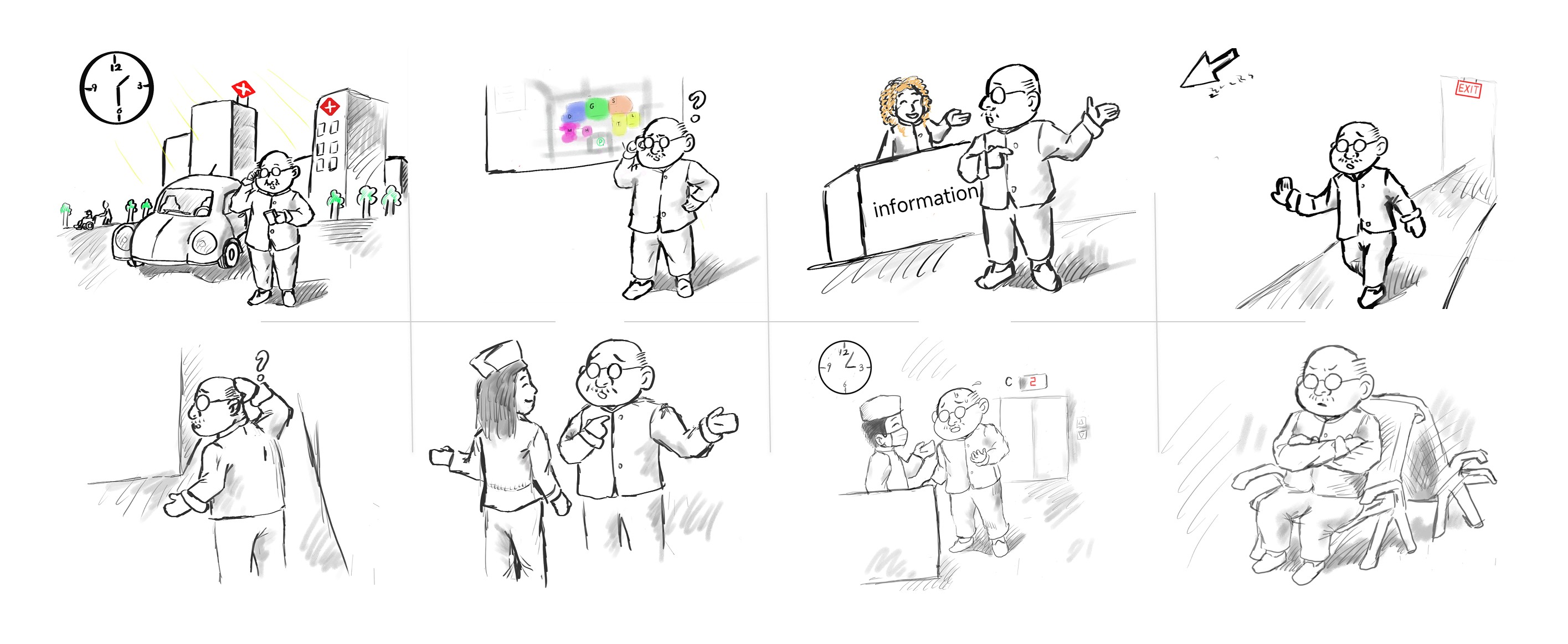
We found that PFAs spend a lot of time redirecting guests instead of focusing on patient advocacy. The underlying issue was ineffective wayfinding. leading us to pivot from needing to recruiting more PFAs to designing navigation tools that help guests navigate independently.
How might we reduce PFA strain by empowering guests to confidently navigate the hospital?
Our Research
6 interviews with PFAs
1 past hospital volunteer interview
3 hospital walkthroughs during peak outpatient hours
Community feedback on parking and accessibility.
What We Learned
“Some elderly visitors conduct dry runs weeks ahead, in fear of missing their appointments due to wayfinding difficulties.”
Wayfinding Issues
Wing layouts are inconsistent due to phased construction.
Routes and turns are unclear.
Parking and entrance choice greatly affect a patient’s ability to navigate.
Staff and Volunteer Gaps
Staff often only know their own departments and can’t assist with directions.
Volunteers stretched too thin with redirection
Patient Emotional Needs:
Patients prefer human help over tech.
Elderly guests describe technology as “a puzzle in its own right”.
Updated Journey
Our solution supports two primary user groups: those who prefer mobile-based guidance and those who rely on on-site aids.
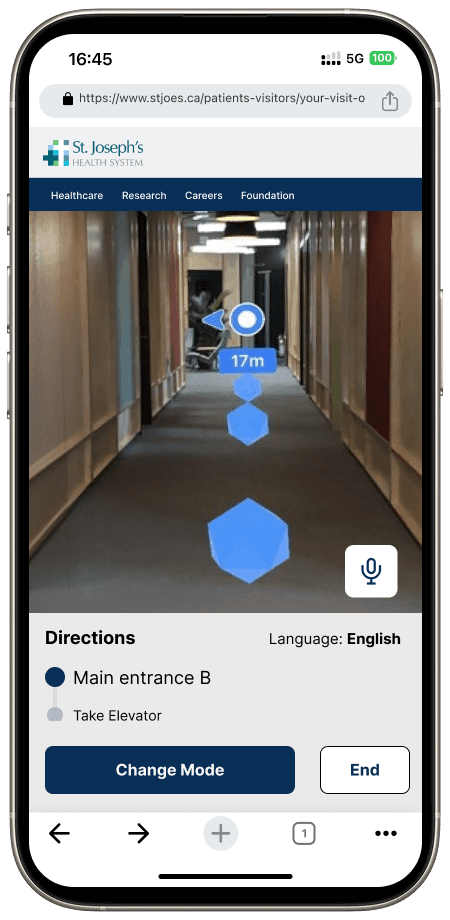
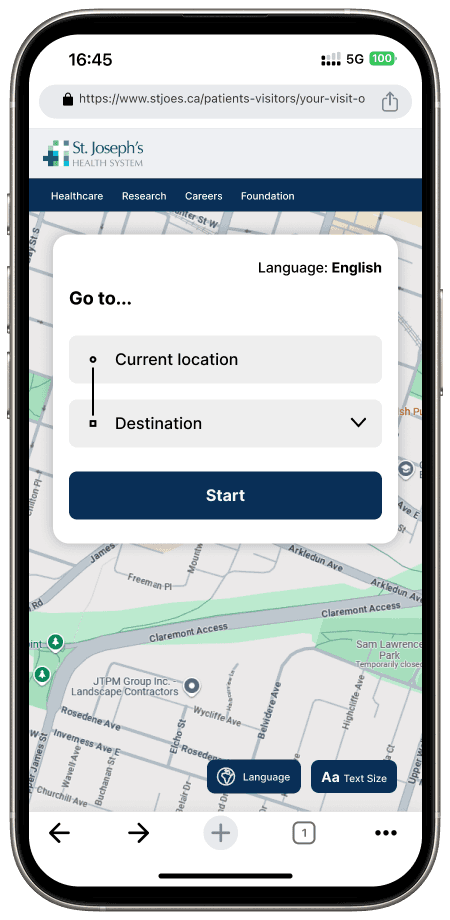
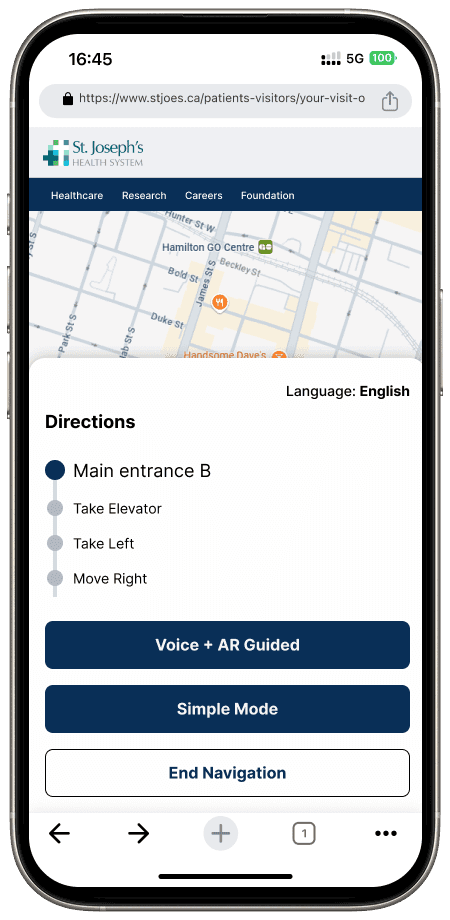
Mobile Navigation: Email or text notifications paired with Web-based live navigation.
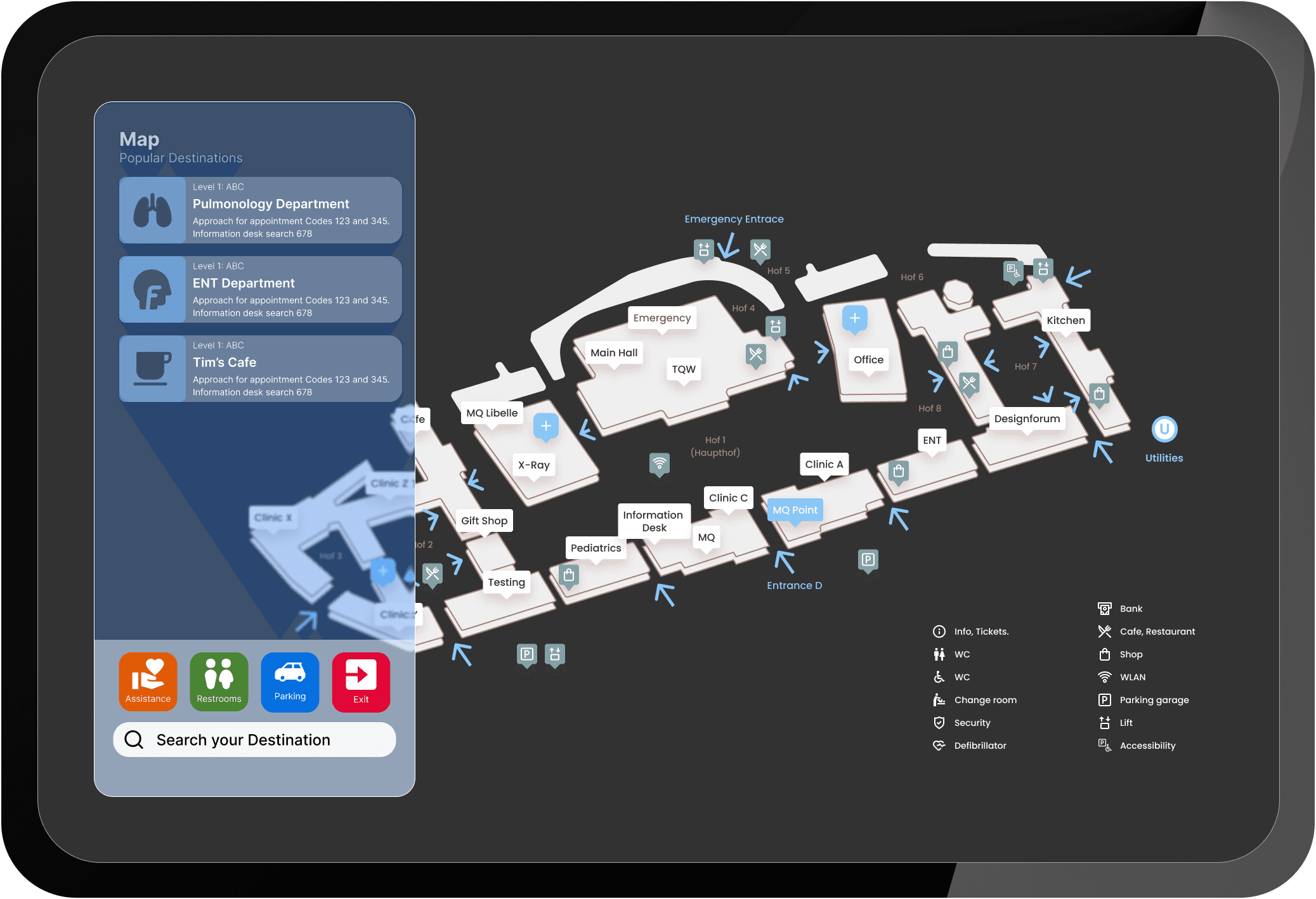
Kiosk Aids: Navigation kiosks equipped with step-by-step instructions and optional printed guides.
Testing and Iteration
We developed a kiosk UI prototype using iPads and conducted usability testing with hospital visitors and volunteers.
Increased font sizes and reduced visual clutter to improve readability
Refined map labels and introduced color-coded wing indicators for clearer navigation
Added a “Call for Help” feature that routes simple assistance requests to volunteers without requiring them to travel to the kiosk
Outcomes & Next Steps
Awarded distinction St. Joseph’s Hospital for work done in collaboration with PFAs.
Accepted for potential pilot by hospital innovation team.
PFAs reported excitement about being freed up for patient engagement.
Student volunteers expressed enthusiasm for a structured, social role.
Key Takeaways:
Never assume the problem: our biggest insight came from listening, not guessing
Accessibility is emotional, not just functional
Human-powered tech systems can be more inclusive than fully digital ones
Next Steps
Pilot rollout in select wings with ongoing testing
Broaden accessibility for non-English speakers and people with disabilities